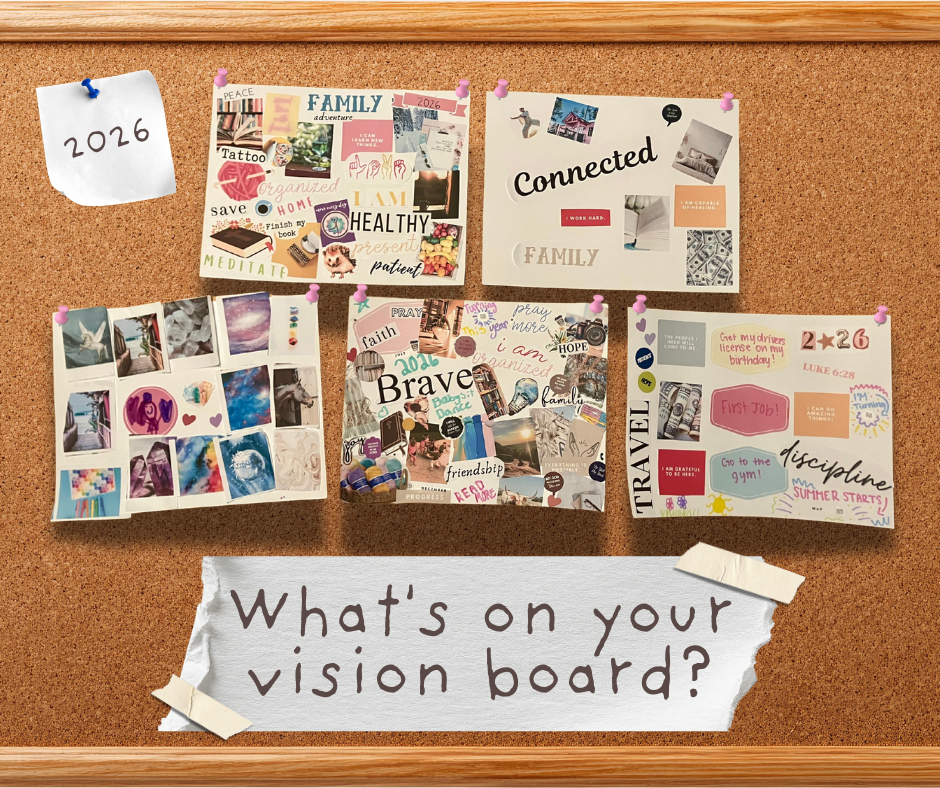
Vision boards (also called dream boards) are a great tool for organizing your goals. They can help you plan and prioritize for the new year, a fresh start, or even a single circumstance in your life. But to some, the thought is so overwhelming that they don’t even know where to begin. I am here to tell you that you can do it, whether you are an experienced scrapbooker or do not have a creative bone in your body! Here are some easy steps to help you get started:
Make a plan: This can look different for everyone and should reflect your style of brainstorming. For some, this might look like choosing a wordfor the year. For example, one year my word for the year was “knowledge.” I was then able to use this as a basis for what to include on my vision board (education goals, pictures of books, certifications I hoped to achieve, etc.). Another option is to complete a worksheet or template to help you prioritize. I have included an example of this below. Finally, you can always “wing it”. Spend some time looking through photos, magazines, and Pinterest boards, and decide what feels right to you. The best thing about creating a vision board is there are no rules!
Gather your supplies: First, choose the board itself to determine your size and options for supplies. This can be anything from a piece of notebook paper to a large poster board. My family chose to use 8.5″x11″ cardstock. Next, gather magazines, photos, handwritten notes, printables, scrapbooking supplies, etc. The possibilities are endless! I have included some printables below that I always keep on hand. If I have an idea that I can’t find on hand, I do an image search and print them individually. I will pass along a little secret here – use double-sided tape or a glue stick for the best results.
Make it a party: Vision boards are always more fun to complete with friends and family! Play some happy music, lay out all of your supplies, and let the fun begin. I have made vision boards with kids as young as 5 years old, and what they come up with continues to amaze me. This can be a great idea to do as a family every year to keep communication open and remember your family values. It would also be a great idea for a church small group or office party. Again, the possibilities are endless!
Display your masterpiece: Hang your vision board with pride in a place that you will see it often. This is the best way to turn your dreams into a reality! We chose to purchase document frames for our bedrooms where we will see them every day. When we have our vision board party next year, we will evaluate our boards from this year to see what we have accomplished. It is a great feeling to share wins with the people close to you.
I hope this makes the idea of creating a vision board seem a little less daunting. It is never too late to get started, and you can continue to add to it throughout the year. Let me know if you have any idea that work well for you in the comments below, and happy dreaming!
Sometimes, supporting a loved one through a difficult time can be harder than going through it yourself. Whether it is grief, addiction, divorce, or a stressful life event, it can be challenging to try to think of the perfect words to say.
The truth is, they don’t exist! Even therapists do not always have the right words to say. Luckily, most of the time your loved one will not remember the exact words you say anyway. They will remember that you were there, and they will remember that they can count on you in the future.
Here are some suggestions for the next time you do not know what to say:
Sit with them in silence – Sometimes, just your presence is enough to speak a thousand words. Sit quietly, without attempting to fill the void with a device or conversation, to show them that you are available.
Offer to meet a specific need – Rather than ask “What can I do for you?”, offer something specific and simple: “I would love to pick up groceries for you. I will leave them on the porch.” Often when people are in crisis mode, even knowing what they need can be difficult. Taking away the burden of decision-making gives them the opportunity to accept help without feeling like a burden.
Wait until they are ready for feedback – It can be tempting to want to share similar situations you have been in or offer advice that you know will be helpful. However, if the person is not ready to listen yet, they will immediately shut down when you do so. Listen to them empathetically and ask before sharing any insight or personal experience.
Acknowledge the pain they are experiencing – Although it can be tempting to try, not every negative thought needs to be turned into a positive. Sometimes, it is okay to just acknowledge how terrible a situation is. In a world full of quick solutions and inspirational reels, it can be meaningful to simply sit in the pain with someone for a while and allow them to work through it.
“Tell me what this is like for you.” – When all else fails, try to be curious and learn more about their experience. Even if you are going through the situation with them, it does not mean you are experiencing it the same way. The more someone feels understood, the more likely they will be to communicate their feelings to you again in the future.
If you have struggled with any of these doubts or feelings of inadequacy when supporting a loved one, know that you are not alone. Often caregivers and loved ones can feel the burden just as heavily as the person directly experiencing it, especially when addiction or mental health struggles are involved. If you do not get the support you need, you will not be able to help those who need you most. Please reach out to us at 501-335-2438 to see how we can help support you as you support others. If we are not the best fit, we will help you to find it!
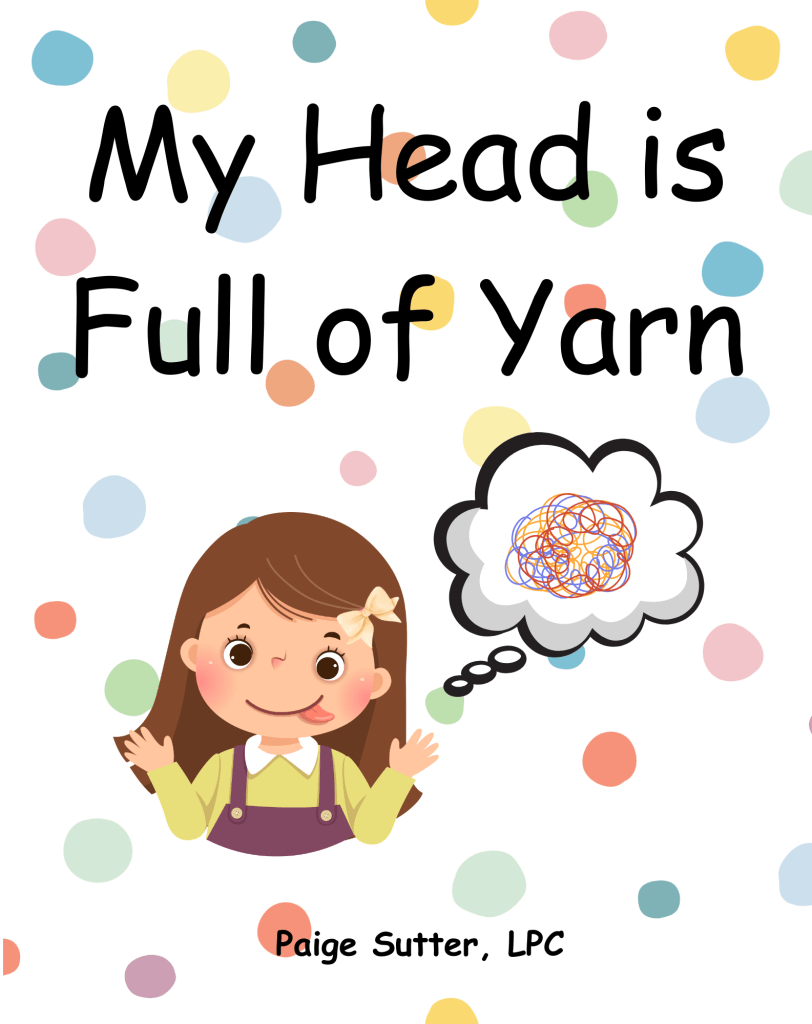
A lot of people have asked me why I chose to write a children’s book. I have always dreamed of being a writer, but it was never on my radar to write for kids. It was never even on my radar to work with kids. And then I became a school-based counselor and a bonus mom to three kids of my own. There is no doubt in my mind that God has a sense of humor!
Working in school-based counseling was simultaneously one of the hardest and most rewarding experiences I have ever had. It’s messy, it’s chaotic, and there were times that I wanted to bang my head against a wall. But it was also beautiful to see just how much some of those kids needed an hour of uninterrupted attention. I saw kids re-enter the traditional classroom environment after a year of needing one-to-one supervision. I saw kids finally break down the walls that they worked so hard to create and find the words to share what was behind them. I also saw kids who tried as hard as they could but could never quite control their emotions in the moment. I saw cycles continue to occur in families, despite best efforts by myself and everyone else around them. And I saw kids continue to hurt and struggle with circumstances that were not in their control.
Writing My Head is Full of Yarn was my way of creating the magical therapy experience that I wish I could have had with every one of those kids. Bella was lucky that she could visit Ms. Joy each week, learn the exact coping skill she needed, and then implement it to perfection. In reality, counseling children is typically a longer process that requires a LOT of trust-building and trial-and-error. Many times, there is good progress, but not without plenty of learning and adjusting along the way. I have had all of the conversations that Ms. Joy had with Bella with my own clients, and then they come back the next week and look at me blankly when I ask them if they tried out their new coping skill. But we practice and process again, and again, and again, and then one day they have that magical moment. And THAT is what makes it all worthwhile.
My hope is that Bella can share a little bit of hope with the families that she encounters. All of the tools in this book might not be helpful for everyone, but if a small piece of the puzzle fits, I count that as a win. I hope that she makes counseling seem a little more normal and a little less intimidating, and I hope that she can share some ideas that might be helpful for parents and teachers to try. Most of all, I hope she sends the message that it is okay to have those big emotions, and there are people willing to help you sort them out if you give them a chance!
To purchase My Head is Full of Yarn on Amazon, click here.
I was sitting at our makeshift home office in the kitchen, staring at the man in a button-up shirt on the computer screen in front of me. My heart was pounding, and my hands gripped the edges of my chair to keep my hands from shaking. I caught myself beginning to roll my chair nervously around the tile and crossed my legs yet again. Sitting next to me my husband, Branson, exchanged pleasantries, and his voice sounded unnaturally loud in my ears. I wondered how the man I was looking at on the screen managed to keep so calm as he prepared to talk about human brains and life-altering decisions. He introduced himself, said that he had reviewed my MRI, and would like to go over the results with us. He might as well have been introducing the weather report he was going to give. All of these thoughts took maybe ten seconds to race through my mind, but to me it felt like an eternity.
Even the morning leading up to this moment had felt long and dreamlike. I woke with a strange sense of relief and dread all mixed together as I finally reached the day in which I was almost certain I would get bad news. People can quote “hindsight is 20/20” all they want, but for months I had harbored a strange feeling in my gut that there was something not quite right in my body. The night before I told my husband that my greatest fear was to hear yet another “I don’t know” and to be stuck in a never ending loop of uncertainty. As I brushed my teeth and got ready for the day I prayed for an answer, any answer, as long as it had a solution.
I floated through my therapy sessions that day, catching the important snippets in between thoughts like “What if it’s cancer?” “How long will I have to live?” “What if he thinks I’m making the whole thing up?” As I was working with children on coping skills, thought stopping, and mindfulness, I was fighting a war with my own thoughts that no one else could see. Branson later told me that he was having a similar battle that morning, with a very tense meeting as a result. He was actually in one of these meetings up until the very moment my neurologist checked in, which led to a frantic scramble as I called and he flew into the room. I don’t know what we thought would happen if he was not there at the exact moment the appointment started, but the answer was that the doctor would wait patiently for his arrival from the next room. When in doubt, schedule a morning appointment. Your clients and coworkers will thank you.
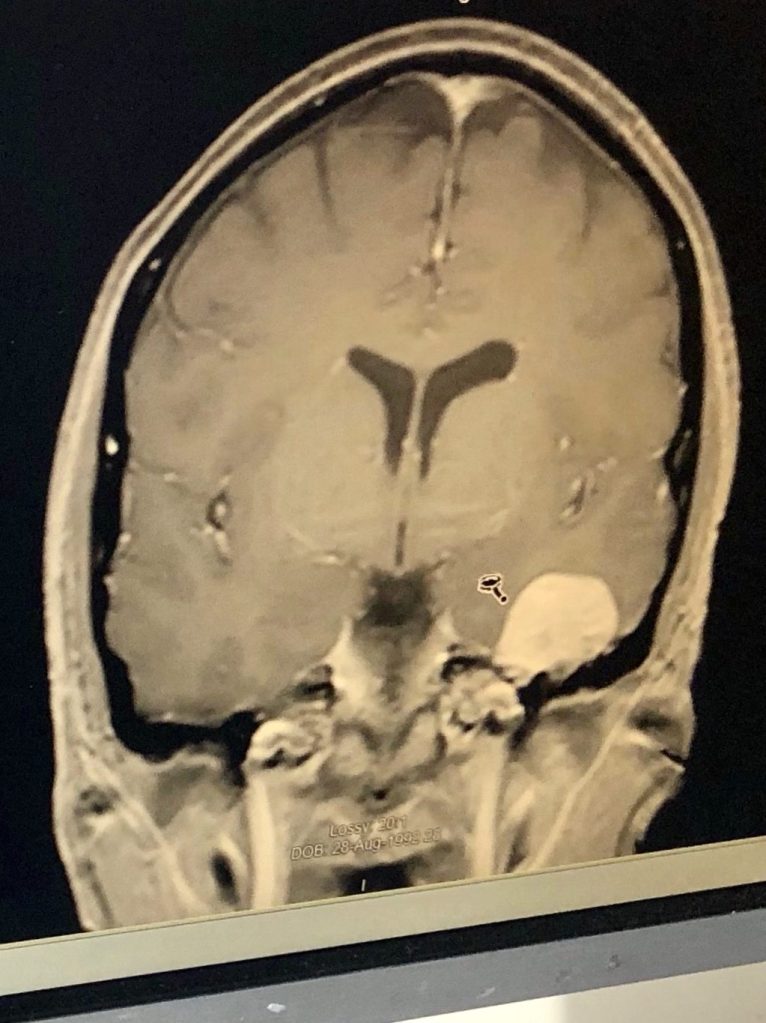
“I found a lesion on your brain around your temporal lobe.” he stated, motioning around his left ear and snapping me out of my reverie. “There are a few different possibilities, but it is most likely some type of tumor.” I heard my husband’s sharp intake of breath as my world shrank to the size of a pinhole. I could almost see the little men running around inside my head, running into each other as they raced to flip off all the switches. For the next ten minutes or so I continued to stare at the man with the white hair and the monotone voice, which was now the only voice in existence, as he discussed symptoms, possible diagnoses, and warning signs. I could feel my husband’s hand in mine and heard words such as “meningioma,” “neurosurgeon,” and “seizures” float by. I vaguely heard my husband ask several questions, and it occurred to me at some point that this was my brain we were talking about; I should probably have a question too. I racked my mind trying to think of something intelligent to say, and all I could come up with was crickets. I eventually asked something, but I have no idea what it was and can’t imagine that it helped us any.
MRI scan of my brain in May 2021
Although I did not take in much information at the time, with the help of Branson and the recording we made we were able to later piece together the nuts and bolts of the conversation. Dr. Oberlander believed that I had either a meningioma or a schwannoma around the back of my ear, and my brain was essentially sitting on top of the tumor. He said that symptoms could include headaches, stumbling, dropping things, blurred vision, and mood changes, all of which I was experiencing to some extent. He also said that seizures were a possibility and provided a prescription to prevent this. Overall, I was impressed with the way he handled all of our questions and gave us the diagnosis in a matter-of-fact way. He also provided us with his personal number in case we had any more questions. He ended the telehealth appointment by saying, “I am referring you to a neurosurgeon who is very skilled in this area and will be able to give you a better understanding of what is going on. His name is Dr. Krisht and I expect you will be seeing him in the next few weeks.” Little did I know that this referral could very well have saved my life.
I can remember the moment I had my first panic attack like it was yesterday. I was only a few weeks into nursing school, and I had my first “check-off” to showcase the new skills I had been learning. Ironically, it was the vital signs check-off. I was instructed to choose a partner, pretend that she was a new patient, and practice taking her pulse, temperature, blood pressure, and respiration. My partner chose to go first, and she frowned as I sat on the table feeling like I was about to pass out. “I think you might be sick…” she said as she read off my vitals to the instructor. I had a fever, and my pulse and blood pressure were much higher than they should have been. Then it was my turn, but the next ten minutes passed by in a blur as my vision faded to black around the edges. Somehow I passed, and my instructor told me to go home and take some Tylenol. By the time I had driven back to my apartment I felt a little shaky, but otherwise back to normal.
Let’s talk about the elephant in the room – specifically, the one that feels like it’s sitting on your chest. The term “panic attack” is thrown around more and more these days, but how do you know if you are really having one? And what can you do to stop it?
The DSM-5 defines a panic attack as “an abrupt surge of intense fear or intense discomfort that reaches a peak within minutes.” 1 The episode must include at least four of the following symptoms:
Palpitations, pounding heart, or accelerated heart rate
Sweating
Trembling or shaking
Sensations of shortness of breath or smothering
Feeling of choking
Chest pain or discomfort
Nausea or abdominal distress
Feeling dizzy, unsteady, lightheaded, or faint
Derealization (feelings of unreality) or depersonalization (being detached from oneself)
A panic attack is not a formal diagnosis; you can have one without having a mental health diagnosis. However, if you have recurrent unexpected panic attacks you might meet criteria for Panic Disorder. PD is typically diagnosed if you have persistent concern or worry about additional panic attacks or a significant change in behavior related to the attack (for example, avoiding a situation in which you typically have a panic attack). Panic attacks can also occur with a variety of other mental health diagnoses, including anxiety disorders, depressive disorders, PTSD, and substance use disorders.
The panic attack back in nursing school turned out to be only the beginning. I have had several other severe episodes since that time, including at a wedding, in a group of friends, and in the middle of my own therapy. Yes, you read that right – in therapy! Bottom line, there is nothing shameful about having a panic attack. I am here to tell you that panic attack is a clinically documented, proven event, just like an having an asthma attack or getting the hiccups. As soon as I recognized what was happening and began to learn ways to identify my own signs and triggers, I was able to find tips and tricks to help manage them. Here are a few of my favorites:
If you feel the early stages of anxiety: These strategies work well if you notice the first signs of a panic attack, such as racing heart or shakiness.
“The Senses Countdown” – Remember the five senses you learned in elementary school? (Seeing, hearing, touching, tasting, smelling) Take each of these senses and count down from five to one as you identify them. For example, “Five things I can see are ____. Four things I can hear are _____. Three things I can touch are _____.” Ideally, by the time you reach the last sense you are feeling more calm and more grounded with your surroundings.
“Listing” – Pick a category that you know a lot about (i.e. characters on your favorite T.V. show, different types of flowers, classic rock bands, etc.) and list everything in that category you can think of. Make sure that it is an easy list for you to remember! Memory can become tricky when you are feeling anxious.
Sing a song in your head – This one is pretty self-explanatory, but the trick is to pick a song that you know fairly well but still have to focus on to sing. Fun fact: my go-to song is “Fifty Nifty United States” from elementary school.
If you are in the middle of a panic attack: These strategies work well if you are having more severe symptoms, such as struggling to breathe or difficulty concentrating.
Deep breathing exercises – Close your eyes and concentrate on breathing slowly in through your nose and out through your mouth. It can be helpful to choose two numbers to count as you breathe, making sure that the exhale is always longer than the inhale. For example, I like to breathe in for three seconds, out for five seconds. Pro tip: teach your spouse, a friend, or a roommate how to count and guide you through this process. It can be helpful to hear the steps out loud.
Grounding exercises – Get as close to the floor as you are able. Lie down, sit with your back against the wall, or stand against the wall if sitting is not an option. Close your eyes and methodically identify each part of your body and what it is touching. For example, “I can feel the cold leather of the chair against my back. I can feel hard plastic under my arms and hands. I can feel my feet pressed into the carpet.” Bonus points if you can take your shoes off!
Guided imagery – Close your eyes and picture a place where you feel happy and safe. Try to imagine how you experience this place with each of your senses. Focus on what it sounds like, smells like, etc. It can be helpful to practice this when you are feeling calm so it is easier to recall in the moment.
I hope that you find these strategies helpful, and I would love to know what works for you in the comments! However, this list is only a brief introduction and is not suited to help everyone. Many people experiencing panic attacks find that a combination of coping skills like the ones above, counseling, and even medication management are needed to effectively manage anxiety. If you or someone you know is struggling with panic attacks, I would love to schedule an appointment with you to discuss treatment options. Having a panic attack can often be your body’s way of telling you something that it needs. It is my job to help you figure out what that need is and how you can begin to feel more like yourself again
References:
American Psychiatric Association. (2022). Anxiety Disorders. In Diagnostic and statistical manual of mental disorders (5th ed., text rev.).
It’s 2023. You’ve put away your Christmas decorations, spent way too much on a new planner and stickers, and posted all over social media about how this is going to be the year you lose weight, eat healthy, and journal every single night. For the first week you workout almost every day and pride yourself every time you take out a lunch that you meal prepped over the weekend. Life is good.
Flash forward to week two, and you did not have time to meal prep over the weekend like you planned. You end up getting fast food a couple of times, and you think “I’ll just workout extra this week to make up for it.” When that doesn’t happen you feel even worse, and then you remember that you have no idea where your journal is and haven’t opened it in days. You throw your hands up and decide you will try again in 2024.
Sound familiar? You’re not alone! A 2016 study found 41% of Americans make New Year’s resolutions but only 9% feel they were successful in keeping their resolutions. After the first week success rates drop down to 75%, and by the six-month mark they drop to 46%. 1 While this can seem discouraging, it does not have to be your story. Read on to learn how you can create New Year’s resolutions that you will be able to post about at the end of the year.
Setting up a plan to actually follow through with New Year’s resolutions can be daunting. Before you can do this, you have to start with the goal itself. In 1981 George Doran, Arthur Miller and James Cunningham developed a concept called S.M.A.R.T. Goals to help us create more meaningful goals that we are more likely to follow through on: Specific, Measurable, Attainable, Realistic, and Timely. 2 By following these guidelines you can create a goal and a plan to reach it all in one step!
Let’s break it down in a practical way. Say I want to work out more (and let’s be honest, I set this resolution every year.) Below I will use the S.M.A.R.T. Goal acronym to create a goal and plan:
Specific – What exactly do I want to accomplish by working out more? Do I want to lose weight? Do I want to build muscle? Do I want to improve my overall well-being? Do I want to improve the quantity or quality of my workouts?
Due to my busy schedule I want to increase the quantity of short workouts each week to improve my overall health.
Measurable – How will I know I am reaching my goal? What unit of measurement will I use? Will I track the number of workouts per week, the number of minutes I spend working out, or the numbers on the scale?
I will know I am meeting my goal if I am completing at least three twenty-minute workouts per week.
Attainable – Do I have everything I need to complete my goal? Do I need to learn more or buy any equipment to help me with my workouts? Will I work out at home, or do I need a gym membership?
I will go for walks at home or do a workout video on Youtube if the weather is bad. I can get started today.
Realistic – Will I be able to stick with this plan over time? Is this goal actually something I can see myself accomplishing?
My daughter loves to go on walks with me in her stroller, so this will be beneficial and doable for both of us. If there is ever a day when we are not able to walk I can do a Youtube workout as backup.
Timely – What is the timeframe for meeting my goal? How will I know if I have accomplished my goal?
Because I am tracking the quantity of my workouts rather than a specific end goal, my goal will continue throughout the year. If at the end of the year I have met my goal most weeks and feel better physically and mentally overall, I will consider myself successful.
Now it’s time to grab that journal and get started! I hope this overview has been helpful and you feel more confident in yourself and your ability to set goals this year. I wish you luck and I would love to hear your New Year’s resolutions in the comments section.
In today’s culture it can be extremely difficult to find grace. You live in a world of perfect Instagram pictures and a constant awareness of how so-and-so’s husband brings home flowers at least once a week. You are continuously bombarded with trends that you feel the need to keep up with, and as soon as you get the cropped jeans you realize that it was flare all along. Not to mention, your friend just ditched on your coffee date and posted a picture with her new coworker instead. With all of these thoughts swirling around in your head, how are you ever supposed to find grace to forgive the people who inevitably hurt you? And more importantly, how can you begin to give them grace when you can’t find it for yourself?
I struggled with these questions constantly throughout my early adulthood. I grew up in a small town where everyone knew everyone, and I learned at any early age how it important it was to have a perfect reputation. I made good grades, I joined the cheer squad, and I did everything I could to make my family proud. I listened to the little voice in my head whispering “If you never mess up, you will never let anyone down.” This worked really well for me until I made it to college and realized how easily everything had come to me as a child. Then, suddenly, I was no longer at the top and had to work much harder to keep my head above water. I struggled through changing majors, a handful of terrible dating experiences, and finding my own identity in Christ before finally graduating with a master’s degree and the man of my dreams.
At this point, from the outside, it looked like I had it all figured out. I became a bonus mom, then a therapist, then a mom again, all while married to my best friend. I had the life I always dreamed of, and still I struggled with that little voice telling me I would never be good enough. I knew all of the sermons on this one, and I constantly prayed for the confidence and peace that I thought I needed. I would go to a social event on the weekend, have a panic attack, and then feel like an imposter as I helped a client through their own that same week. Throughout this constant internal battle what kept me growing and improving was the unwavering faith that God never left me through all of it.
Flash forward to 2021 – I was diagnosed with a brain tumor. My world came crashing down around me, and the tiny bit of control I had managed to hang on to was ripped away during a twenty-minute appointment with a neurologist. In the year that followed I learned more about myself than I had learned in the twenty-plus years prior, and my number one takeaway was that I needed grace. I did not need some kind of magical peace or confidence boost to change the world; I just needed to have the faith to get through the next day. I had to relearn what God’s grace looked like, I had to learn to have grace for myself, and I had to learn how to find it for others. I don’t have it all figured out yet, but I learn more and more every day.
I continue to believe that everything I have been through happened for a reason, and my hope is that I can help you to find that grace as well. This desire led me to take a leap of faith and begin Finding Grace Counseling in the same year that I was diagnosed with a chronic disease. Whether it is a diagnosis, an past relationship, crippling social anxiety, or just that little voice in your head that never stops, you are not alone in your feelings of helplessness. My goal is to come alongside you and empower you to restore your faith in God and yourself and to begin to take the first small step towards grace.
“Each time He said, ‘My grace is all you need. My power works best in weakness.’ So now I am glad to boast about my weaknesses, so that the power of Christ can work through me.”







 Finding Grace Counseling and Wellness, LLC